Service processes grow by accretion. A check is added after one mistake, a form after one complaint, an approval after one audit finding. Each makes sense on its own; together they slow everything down and add cost the customer never sees the value of.
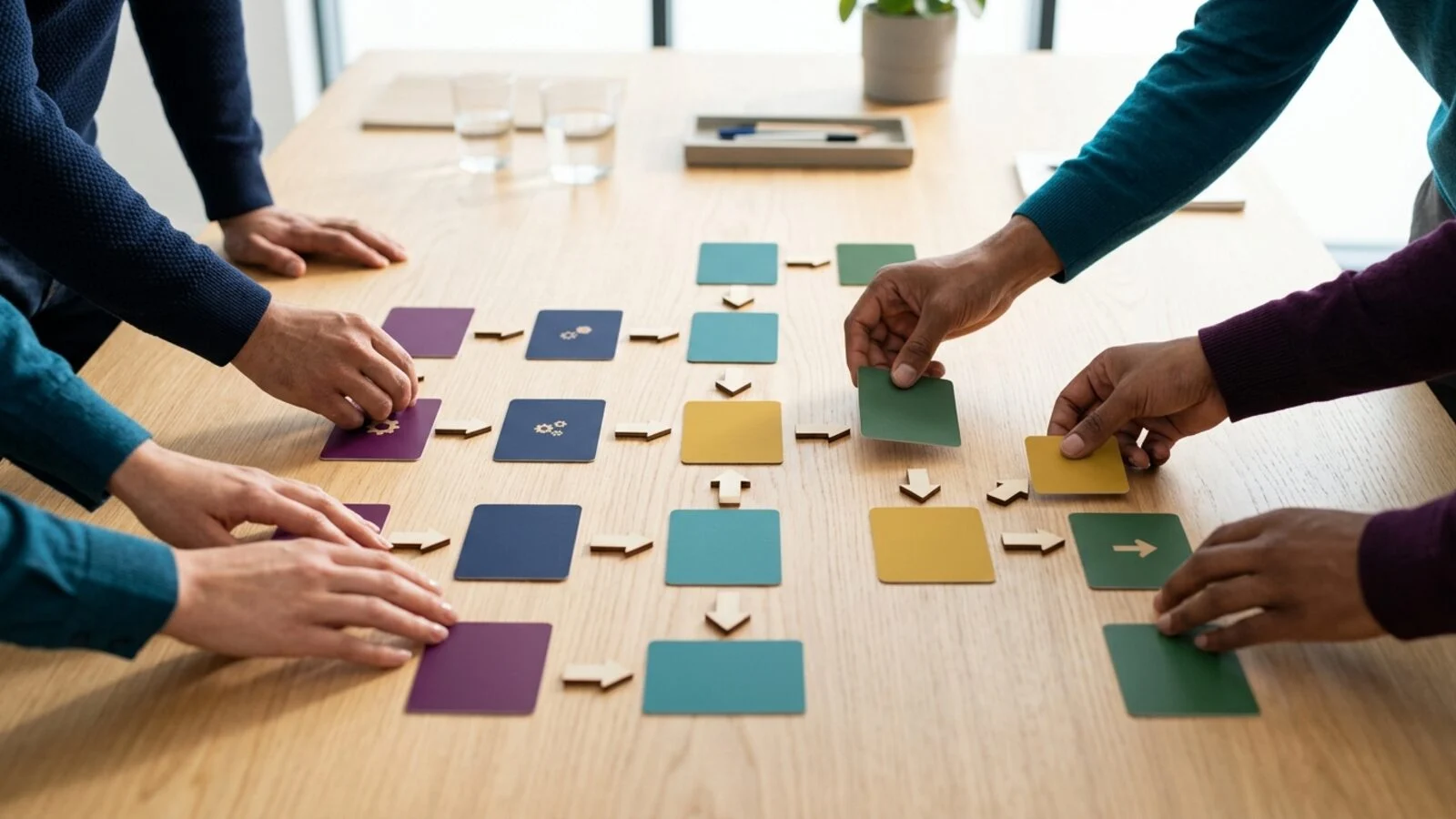
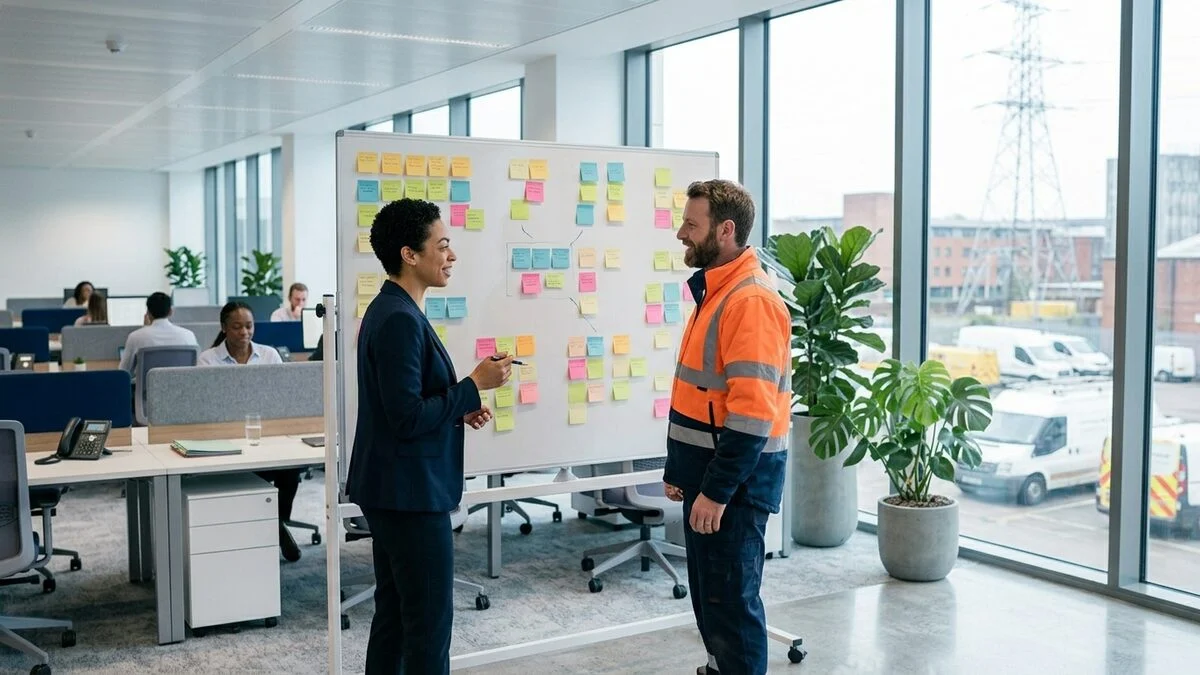
We take a systems view. Rather than starting with process maps, we start with demand and purpose: what customers ask for, and what the process is for. We then study how the work flows today, measuring how long cases really take from end to end, how often they loop back, and where they wait. Our consultants work alongside your staff in the operation itself, not in a project room down the corridor.
The redesign is led by the people who do the work. We help them strip out steps that add no value, move expertise to the front of the process, and build simple measures that show flow rather than activity. Changes are tested on live work in a small area first, then extended once the results are clear.
Typical outcomes include end-to-end times cut by 40 to 60 per cent, productivity gains of 15 to 30 per cent and a noticeable fall in complaints. Just as important, teams finish with the skills to keep improving. We often train a group of internal practitioners through our accredited Lean Practitioner course during the work, so the method stays when we go.