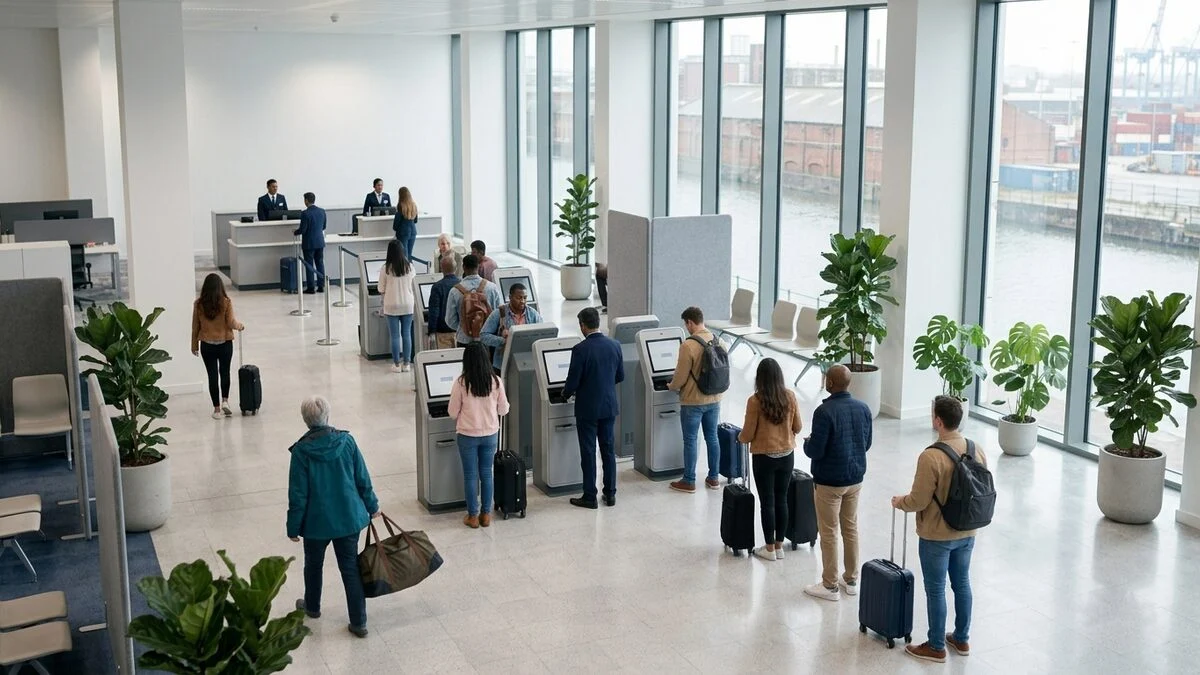
Travel operators have spent heavily on technology over the past five years: apps, self-service check-in, automated rebooking, chatbots and new contact-centre platforms. Some of that spending has changed the passenger experience for the better. Some of it has moved work from one team to another, or from the operator to the passenger.
This review draws on interviews with operations and customer leaders at 24 UK airlines, rail operators, ferry companies and tour operators, and on contact data from eight of them. It asks a practical question: which investments reduced the effort for passengers and staff, and which did not?
The answer depends less on the technology than on whether the underlying process was sound. Automated rebooking worked well where disruption rules were simple and agreed in advance. Where they were not, it produced options passengers could not use and calls that took longer to resolve.
The same pattern appeared in contact centres. Operators that judged chatbots on how many conversations they handled reported success; those that checked whether passengers called afterwards found a different picture. The paper sets out the measures we think matter, and shows how four operators have changed what they report to their boards. Interviews took place between January and April 2026.
What the paper covers
- Where self-service has reduced demand on staff, and where passengers abandon it at the first exception.
- What the operators with the fewest disruption calls did before, during and after a disrupted day.
- How to judge chatbots and messaging on resolution rather than containment, with figures from four operators.
- The data that operations teams need in real time, and the reports they can stop producing.
- How to sequence technology investment behind process change, with a twelve-month example from a ferry operator.
- A short guide to assessing technology suppliers on outcomes, not features.
Who it is for
The review is written for chief operating officers, customer directors, heads of digital and contact-centre leaders in travel and transport. Much of it applies to any operator that manages bookings, schedules and disruption, including events and hospitality. It does not recommend particular products or suppliers.