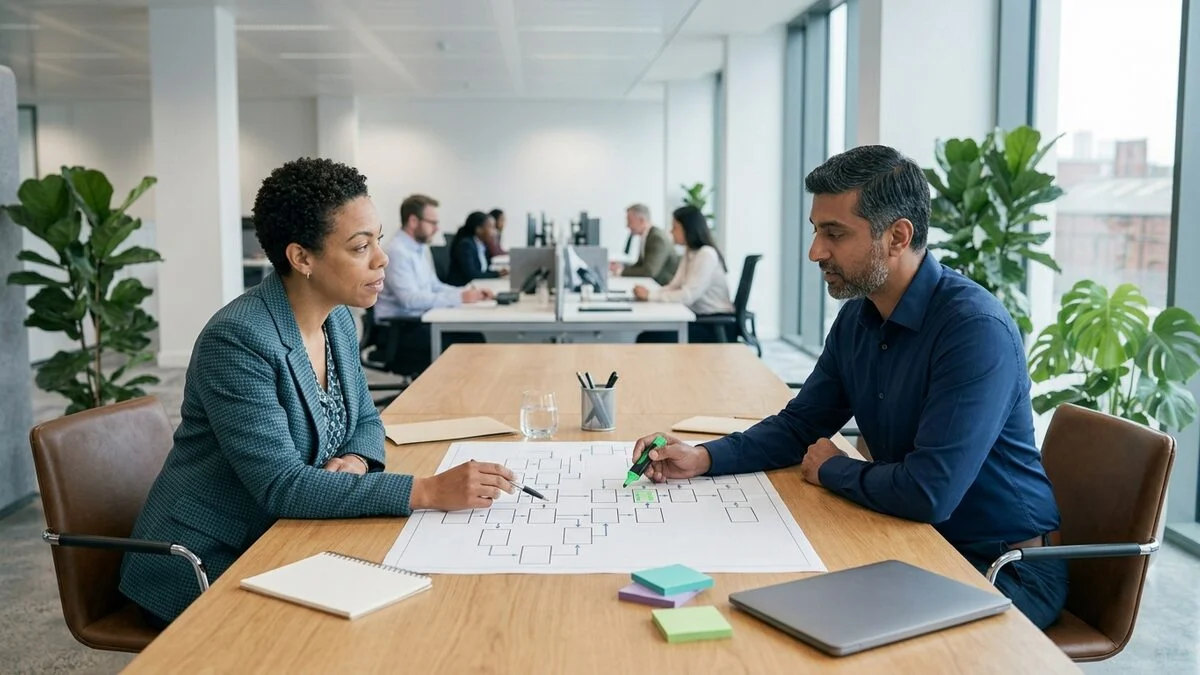
Most transformation programmes begin with a target operating model and a business case. Fewer begin with an honest account of how the organisation works today. We start there: how demand arrives, where work queues, which decisions are escalated and why, and how much change is already in flight. In a typical six-to-eight-week diagnostic we find that a quarter or more of current projects overlap, compete for the same people or no longer serve the strategy.
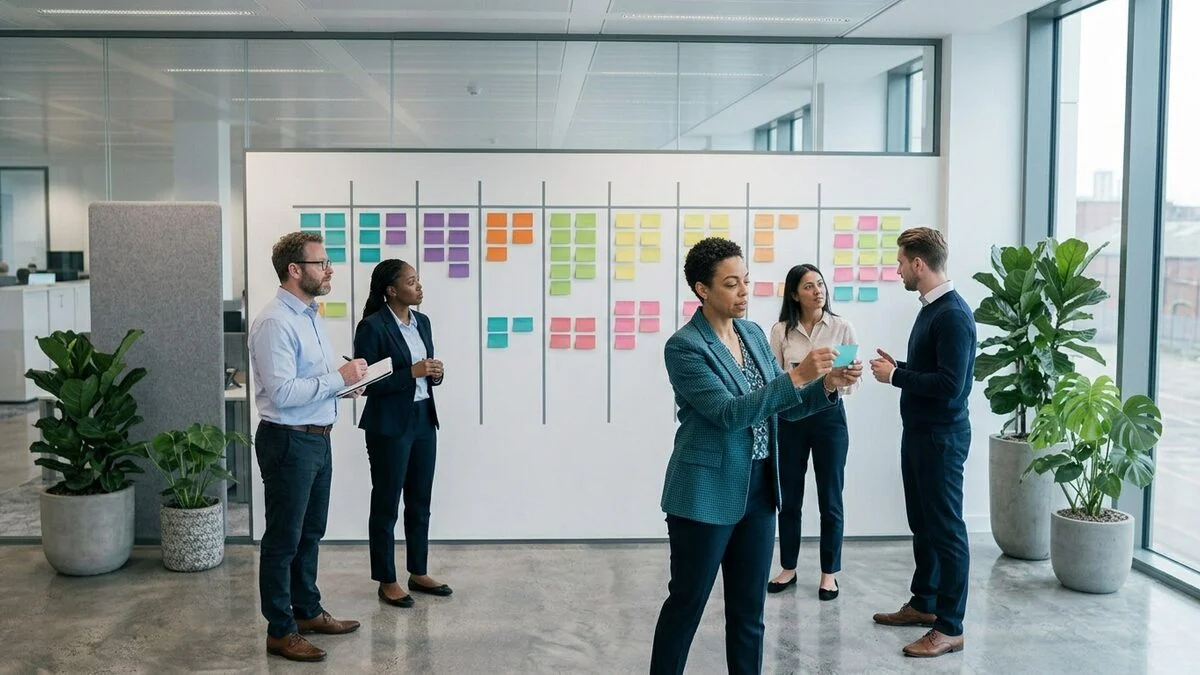
With that picture in hand, we help the executive team agree a small number of outcomes, measured from the customer's side as well as the finance director's. We then sequence the work into stages of three to six months, each with its own benefits case, so the programme funds itself as it goes rather than asking the board for faith. A lean programme office, usually staffed by your own people, tracks benefits rather than activity.
Our role changes as the programme matures. Early on we lead the design work and run the first stage alongside your teams. Later we coach your leaders to run each stage themselves, and we step back as they step forward.
Results depend on the starting point and the ambition, but clients typically release between 15 and 25 per cent of operating cost over two to three years while customer satisfaction holds or improves. Just as valuable, they finish with a leadership team that knows how to run the next change without us.