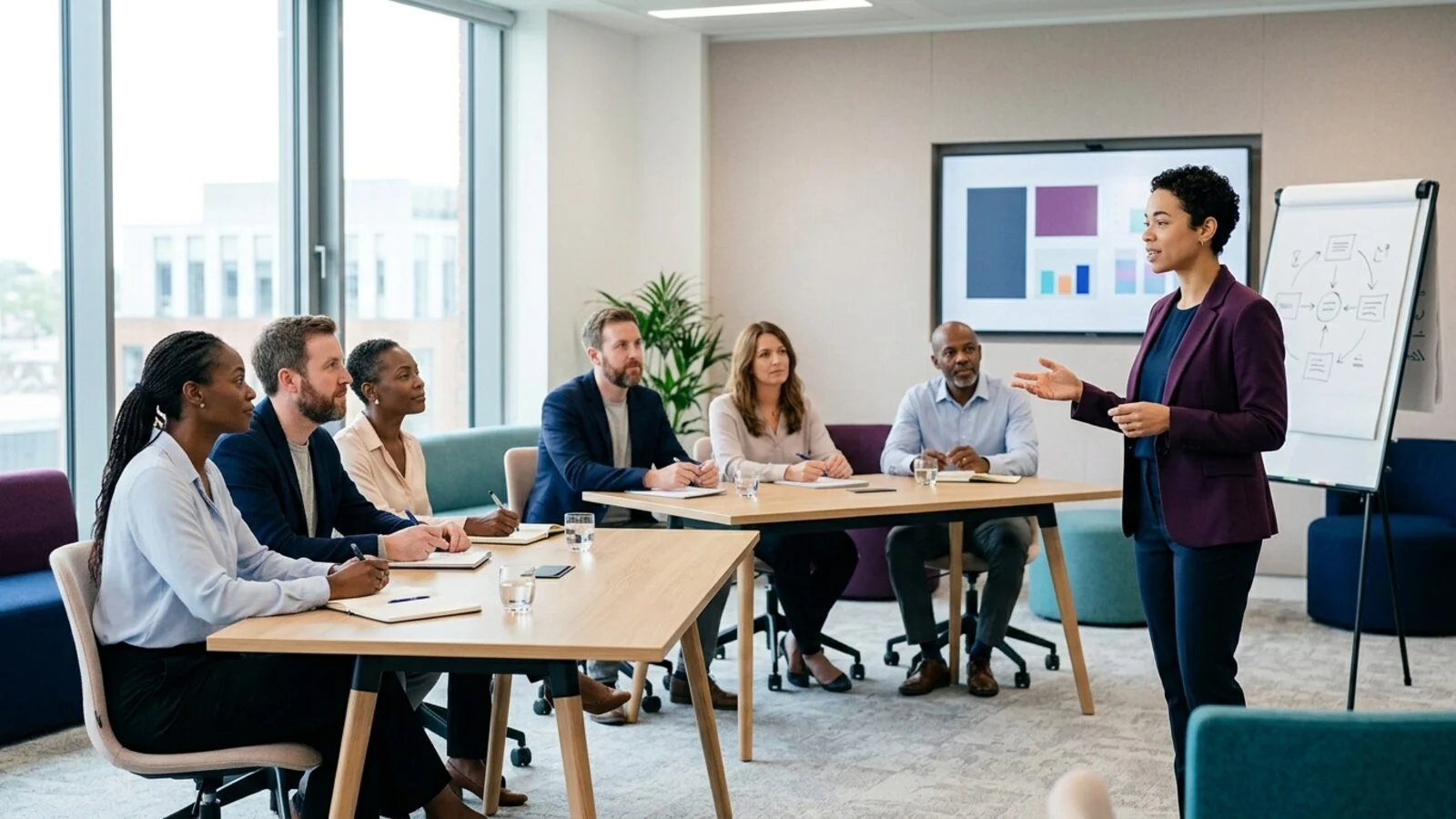
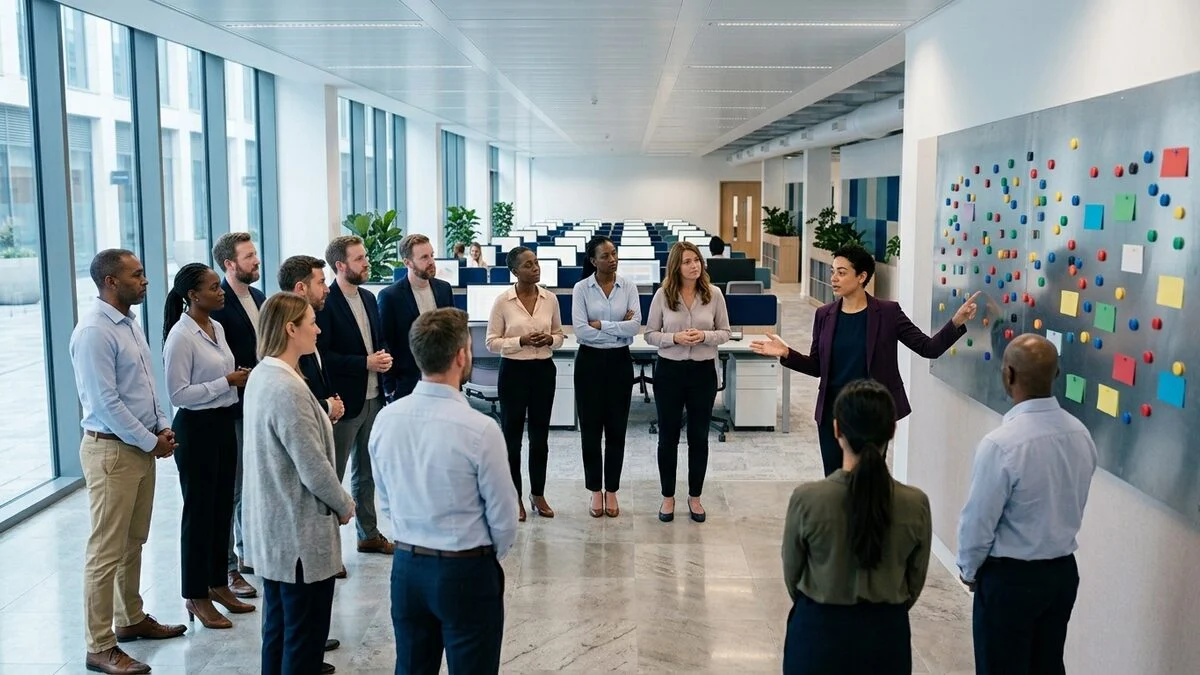
Training that happens in a classroom and stays there is an expensive day out. Our courses are built the other way round: every delegate brings a real problem from their own organisation, applies each tool to it during the course, and leaves with a plan they can put to work the following week.
We offer three kinds of learning. Open courses, such as Lean Practitioner and Service Excellence, bring together managers from different organisations and sectors, which is often where the most useful ideas come from. Custom programmes are designed for a single organisation, using its own processes, language and data. Coaching on the job supports managers as they lead improvement work, usually alongside one of our consulting engagements.
Our practitioner courses are accredited by the Service Operations Institute and the Centre for Customer Practice, and our coaching programme follows the standards of the Coaching Standards Council. Our tutors are working consultants, not full-time trainers, so the examples they use are current and the advice is practical.
Delegates typically complete an improvement project within three months of their course, and many organisations measure a clear return on the training through those projects alone. We follow up with each delegate's sponsor at three and six months to review progress, and our alumni are welcome to join the Lean Service Forum to keep learning from their peers.